Head & Neck Surgery
Finding a lump in your neck is frightening, and waiting to find out what it is, is worse. Mr Bidaye provides prompt specialist assessment, arranging imaging and biopsy where needed, so you are not left guessing any longer than necessary.
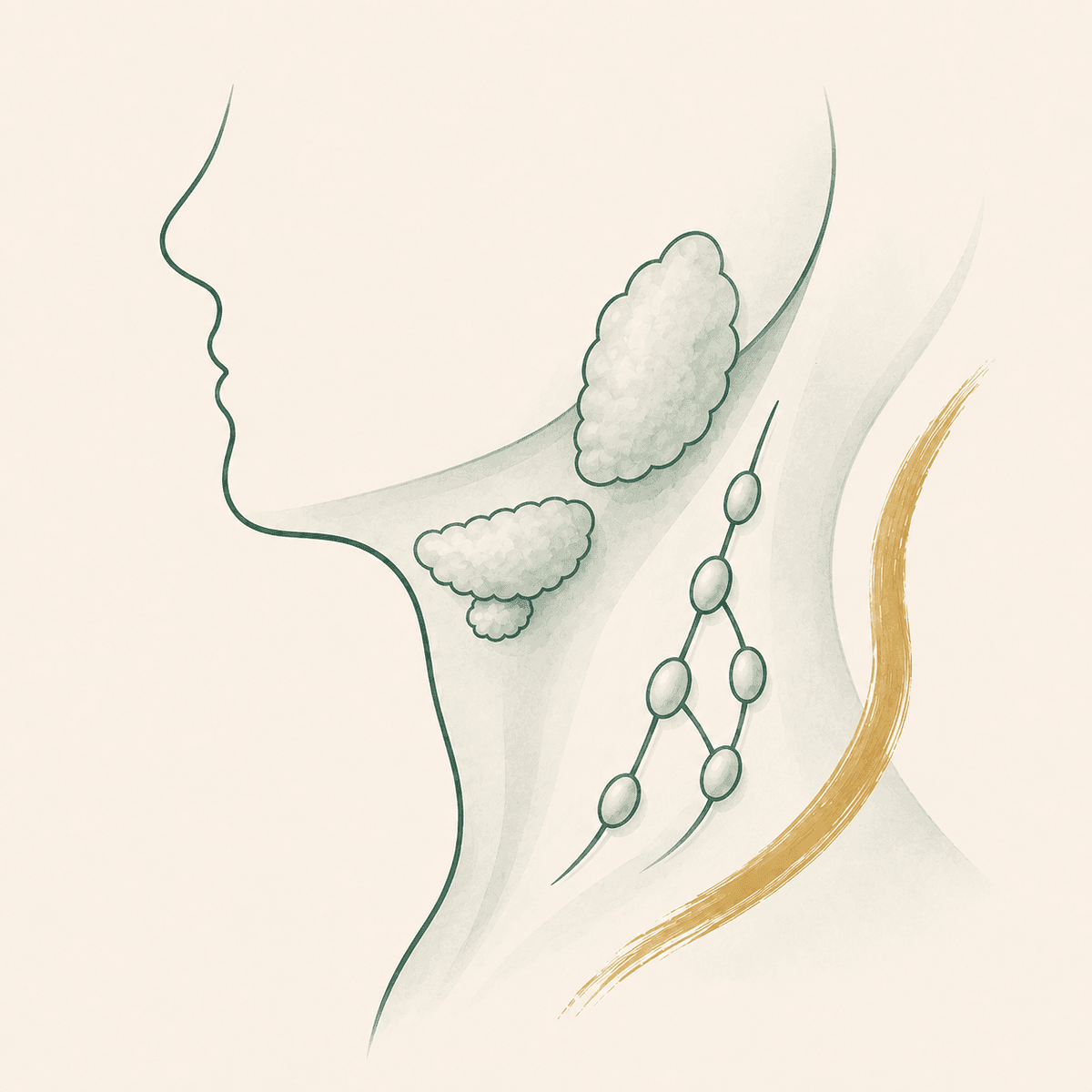
Conditions Mr Bidaye treats
A lump in the neck
Any new or enlarging neck mass: lymph node, thyroid or salivary gland
Swollen glands that have not gone down
Cervical lymphadenopathy needing biopsy or excision
Salivary gland swelling or tumour
Parotid, submandibular and minor salivary gland lesions, benign and malignant
Throat or mouth cancer
Head and neck squamous cell carcinoma (HNSCC): cancers of the oral cavity, oropharynx, larynx and hypopharynx
Cyst on the side of the neck
Branchial cyst
Lump in the midline of the neck
Thyroglossal duct cyst
Soft lump under the skin
Lipoma
Skin cyst on the neck
Selected epidermoid and sebaceous cysts, neck region
Procedures & techniques
Ultrasound and needle biopsy
Arranged through radiology following your initial consultation; fine needle aspiration (FNA) to characterise a neck mass
Biopsy for suspected cancer
Biopsies of suspicious lesions in the nasal cavity, nasopharynx, oral cavity, oropharynx and larynx, plus selected lymph-node biopsies
Neck lump removal
Excision of benign or diagnostically uncertain lumps (cysts, lipomas, selected lymph nodes) for diagnosis or symptom relief. Routine neck dissection for cancer treatment is not offered privately.
Salivary gland surgery
Selected parotidectomy and submandibular gland excision, with facial-nerve monitoring routinely available for parotid surgery and surgical loupes used to enhance visualisation of the facial nerve
Mr Bidaye's approach
Mr Bidaye holds a Senior Clinical Fellowship in Head and Neck Surgery from Addenbrooke's Hospital, Cambridge University Hospitals NHS Foundation Trust, with further relevant head and neck experience at Tata Memorial Hospital, Mumbai, and King Edward Memorial Hospital, Pune.
Book a consultation
Appointments are with Mr Bidaye himself and run a full half hour, so there is time to examine, explain, and answer what brought you in. Private appointments can be booked online; our secretary can also advise on insurance and fees.